
Overview
About the Course
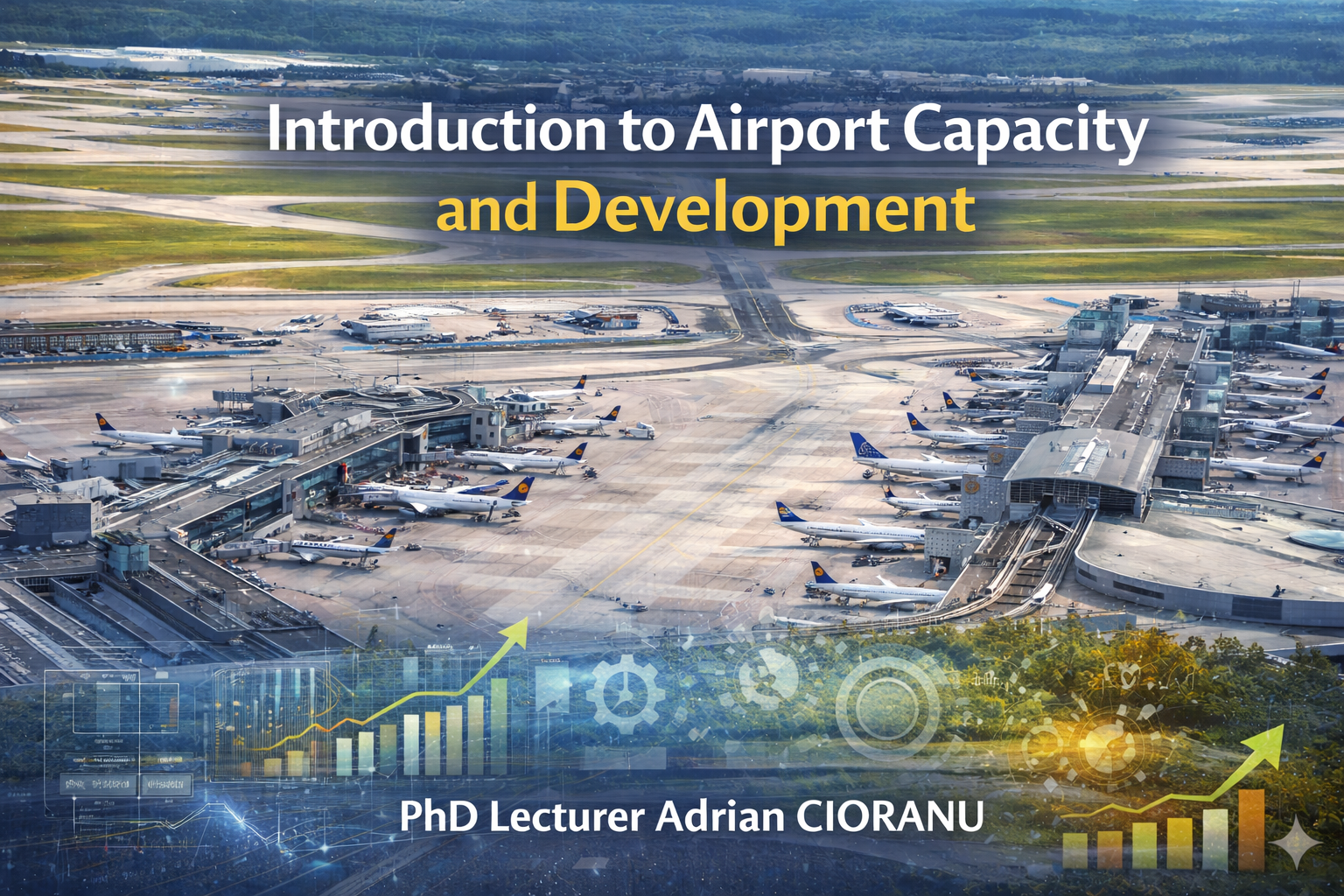
The course will provide the participants with an understanding of the principles and methods applicable to airport capacity calculation, including industry best practices applicable and how to manage temporary capacity reduction scenarios. Airport development and capital investments will be addressed from a strategic perspective for efficient management decisions.
Learning Objectives
Upon completion of this course, participants will be able to:
• Apply guidance material on establishing airport capacity parameters.
• Use best practices to conduct the airport capacity analysis.
• Optimize operations to meet demand for capacity in the short to medium term before an expansion of the infrastructure may become available.
• Evaluate airport development requirements and make effective decisions for major capital investments.
Course Overview:
Module 1 — Understanding Airport Capacity. Participants build a shared, practical definition of capacity and learn how capacity is expressed and constrained across runways, apron/stands, terminals and landside interfaces. The module clarifies the drivers that shape capacity and frames capacity as an “efficient use” concept.
Module 2 — Governance and Stakeholder Engagement. Participants learn about the role and importance of governance when determining airport capacity: who leads, who must be consulted, and how decisions are formalized and accepted. The module covers the respective roles of the airport operator, airlines, ATC, coordinators (where applicable), regulators/control authorities, and other operational stakeholders, emphasizing transparent consultation and structured coordination, especially in constrained, coordinated environments where declared parameters and agreed operating rules directly affect airline schedules and airport performance.
Module 3 — Capacity Management and Enhancement. Participants develop a practical toolbox for diagnosing bottlenecks and increasing throughput before major infrastructure developments, using capacity assessment and modelling approaches suited to the runway–taxiway–apron system and to terminal processing areas. The module links runway capacity to delay dynamics and applies Level of Service concepts to understand when to optimize processes, reconfigure space, adjust staffing/operating hours, or change operational rules – while also accounting for environmental constraints and seasonal coordination parameters.
Module 4 — Strategic Capacity Planning. The module moves from short-term optimization to long-term development logic: forecasting demand, translating it into system requirements, phased planning and balanced investments. The module introduces master planning thinking, future-proofing, technology and process integration, and sustainability/regulatory considerations, with a focus on staged delivery that maintains operational continuity while progressively increasing capacity across airside and terminal subsystems.
Module 5 — Final Recap. Participants consolidate the end-to-end picture, as the module reinforces the link between capacity and service outcomes, while safeguarding safety, resilience, and passenger experience.
Course Features
- Lectures 6
- Quiz 0
- Duration 10 weeks
- Skill level All levels
- Language English
- Students 0
- Certificate No
- Assessments Yes
Curriculum
Curriculum
- 1 Section
- 6 Lessons
- 10 Weeks
- Complete VIDEO Course in 5 Modules:6 Items
- 1.1Introduction to Airport Capacity and Development1 Minute
- 1.2Module 1 — Understanding Airport Capacity11 Minutes
- 1.3Module 2 — Governance and Stakeholder Engagement32 Minutes
- 1.4Module 3 — Capacity Management and Enhancement84 Minutes
- 1.5Module 4 — Strategic Capacity Planning62 Minutes
- 1.6Module 5 — Final Recap35 Minutes
Instructor

You May Like


Search Engine Optimization (SEO): On-Page, Off-Page and Semantic Web Strategies
Understanding how search engines discover, interpret, and rank web content is essential in today’s digital ecosystem. This course provides a practical and structured introduction to...
From Search Engine Optimization to Generative Engine Optimization
The digital visibility landscape is rapidly evolving. Traditional Search Engine Optimization (SEO) is no longer the final destination — modern web platforms must now adapt...


IT for Business – Hands-on Intro to MS Excel
This course offers a practical, step-by-step introduction to Microsoft Excel, designed for beginners who want to quickly build essential skills for academic and business use....


An Introduction to Etiquette and Protocol. On manners, attitude and know-how
Etiquette and protocol are the foundational structures of human interaction, designed to foster respect, efficiency, and harmony in social and professional environments. While often used...

Essential communication in protocol and skills for business etiquette
Do you want to know the unwritten rules and formal procedures that govern professional behavior, essential for building trust, respect, and successful business relationships? While...